
Key takeaways
- Use ISO/IEC 19770 as a maturity lens, not only a certification target.
- Connect SAM processes to business governance and lifecycle control.
- Improve evidence quality before measuring maturity.
- Prioritize gaps that reduce audit, renewal, and spend risk.
Clarifying the standard
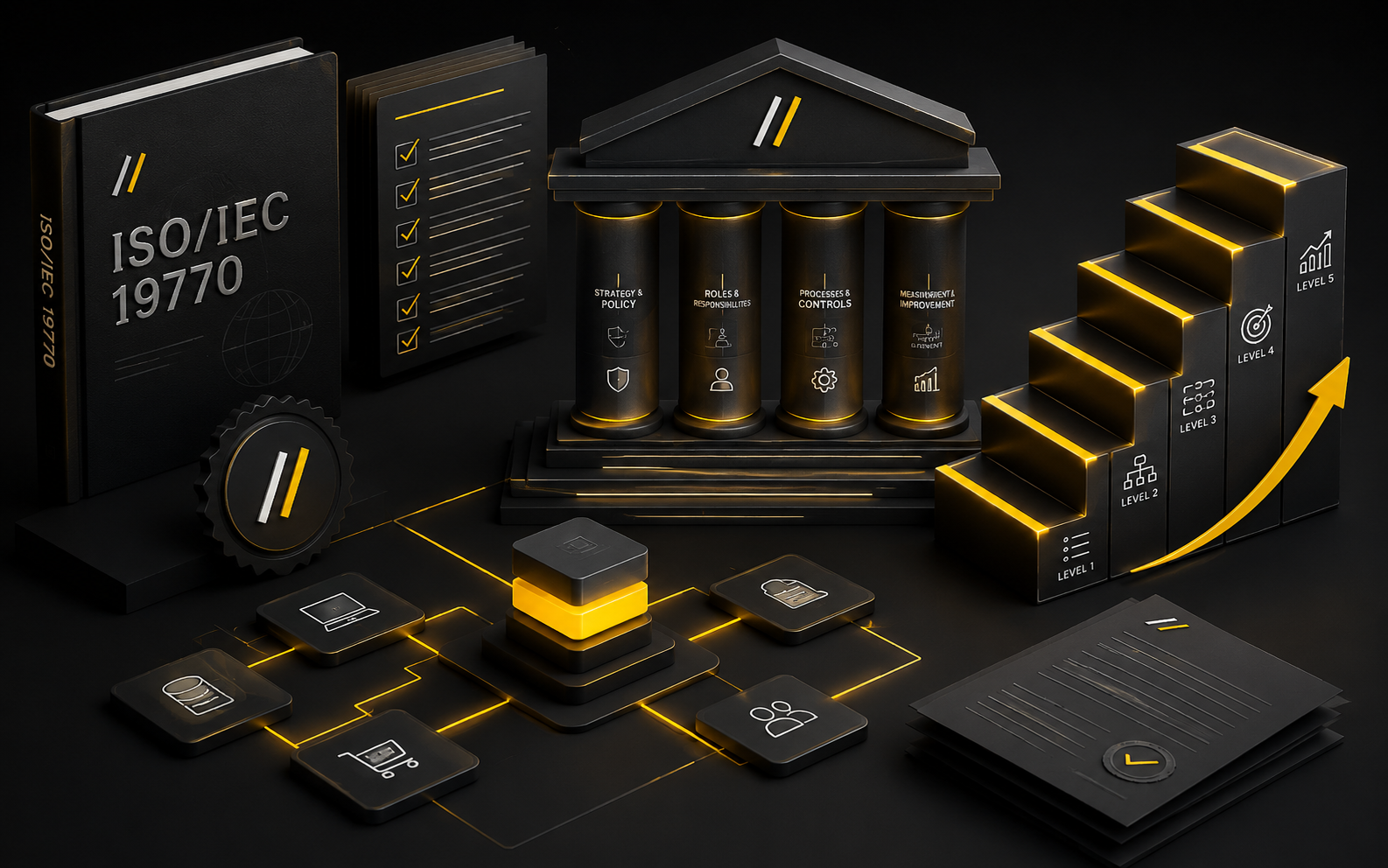
The standard often discussed in SAM maturity conversations is ISO/IEC 19770, especially ISO/IEC 19770-1 for IT asset management systems. It is not simply a software inventory checklist. It is a governance and management-system approach.
From SAM operations to ITAM governance
Many organizations begin with license compliance and discovery. Maturity requires a broader operating model: request, procurement, deployment, change, support, renewal, retirement, cloud consumption, SaaS ownership, and risk control.
How to use it practically
Use the standard as a maturity map. Identify gaps in policy, data, process integration, role ownership, evidence, measurement, and continual improvement.
Process view
The practical sequence below keeps the review structured and avoids rushing into vendor, auditor, or provider conversations before the internal position is clear.
1. Policy
Clarify scope and ownership before collecting evidence.
2. Process
Validate facts against contracts, systems, and business context.
3. Data
Separate technical data from commercial interpretation.
4. Controls
Create an internal position before external engagement.
5. Improvement
Convert findings into action, remediation, or negotiation steps.
Readiness matrix
| Area | What to test | Why it matters |
|---|---|---|
| Evidence | Contracts, deployment, usage, ownership, and exception data. | Weak evidence creates weak negotiation and audit positions. |
| Interpretation | Commercial terms, metrics, exclusions, and historical rights. | Technical data alone does not explain license exposure. |
| Governance | Decision rights, escalation path, and remediation ownership. | Clear ownership prevents findings from becoming stalled risk. |
| Commercial action | Renewal timing, negotiation options, and cost scenarios. | Readiness is valuable only when it changes the decision path. |
Detailed PDF guide
Download the full guide
The PDF includes deeper analysis, visual timelines, flowcharts, risk matrices, and a practical review checklist.