
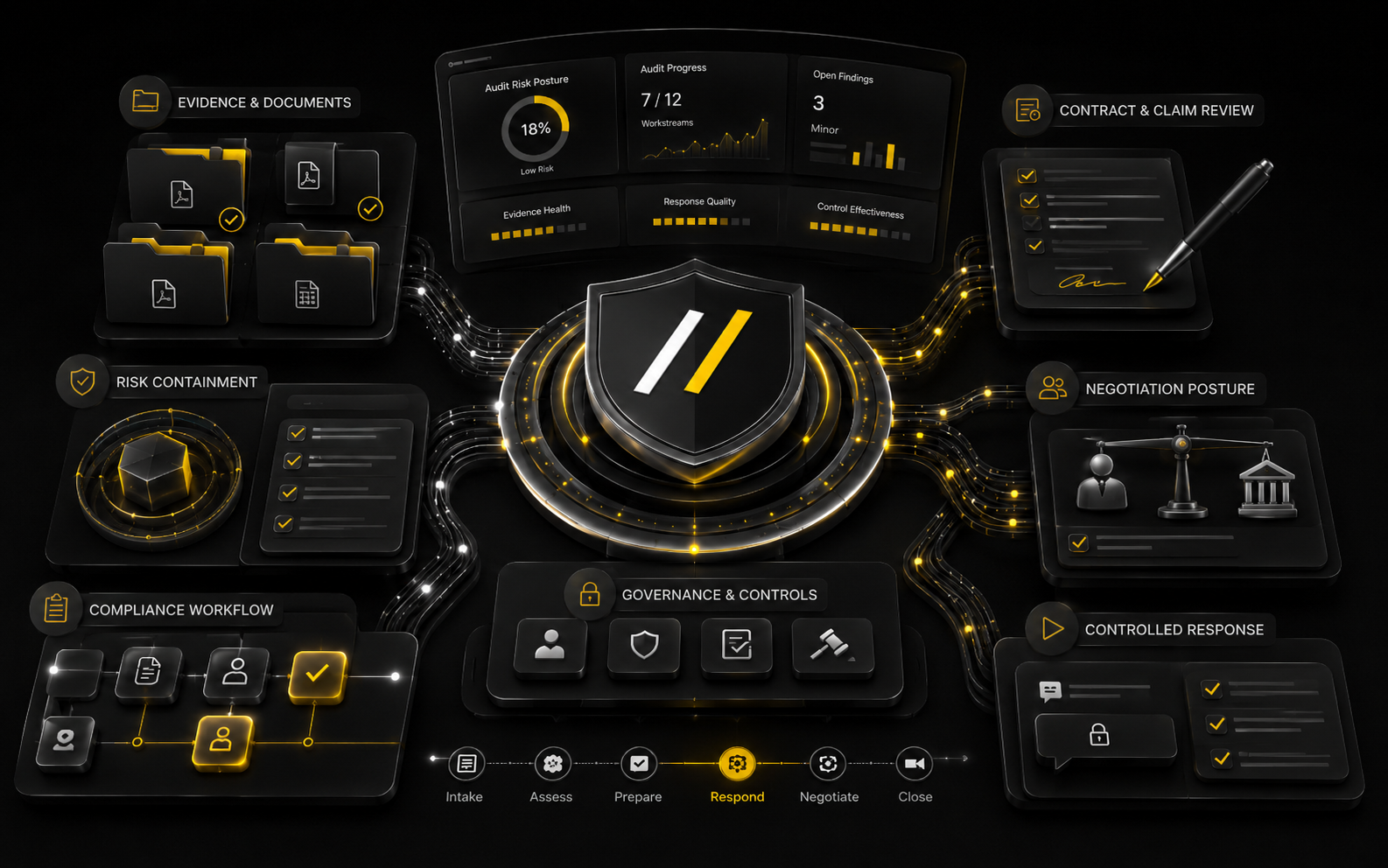
Key takeaways
- The best audit response is controlled, factual, and contract-led—not emotional or improvisational.
- Every audit should be handled through one response owner and one evidence library.
- Entitlements, usage evidence, and contract terms must be separated before they are reconciled.
- Never overshare raw data until the request scope and contractual basis are clear.
- A response plan should include legal, commercial, technical, and communications tracks.
Audit defense is not about conflict for its own sake. It is about controlled response. When organizations lose control, it usually happens because multiple teams respond independently, evidence is incomplete, or the publisher’s request is treated as broader than the contract actually supports.
The 5 workstreams
Entitlements
Collect agreements, ordering documents, renewals, and proof of purchase into one validated library.
Usage evidence
Capture deployment and usage data in a repeatable, reviewable format. Know what was measured and when.
Contract terms
Confirm notice periods, scope rights, affiliate coverage, measurement methods, and confidentiality language.
Response plan
Set roles, communication rules, and approval steps before any data leaves the organization.
Remediation
Model technical correction, commercial settlement, and operational follow-up as separate decisions.
What to do in the first 72 hours
- Name a single response owner.
- Freeze side conversations with the publisher until the request is understood.
- Create an evidence folder with version control.
- Review the governing contract before any data collection is approved.
- Agree on what internal message goes to IT, procurement, and leadership.
What helps and what hurts
| Do | Do not |
|---|---|
| Validate the request against contract rights. | Assume the broadest possible interpretation by default. |
| Provide curated and explained data sets. | Dump raw exports without context or quality review. |
| Document all assumptions. | Rely on memory or undocumented verbal explanations. |
| Separate legal position from settlement strategy. | Confuse technical remediation with admission. |
Build a defensible response pack
A strong response pack usually contains: a request summary, contract analysis, entitlement ledger, usage methodology, exception log, and management position. The goal is not volume. The goal is clarity.
After the audit
Whether the result is clean, negotiated, or contested, close the cycle with lessons learned. Update measurement controls, clean procurement records, and assign owners to any policy or tooling gaps that the audit exposed.
Quick FAQ
Who is this article for?
ITAM leaders, sourcing teams, software asset managers, procurement stakeholders, and advisors dealing with audits-related decisions.
Detailed PDF guide
Download the full guide
The web article gives you the concise view. The PDF includes deeper analysis, visual timelines, flowcharts, checklists, and practical review steps.
What should I do next?
Use this article to sharpen your internal brief, then submit an initiative or reach out if your team needs specialist help.
Related insights
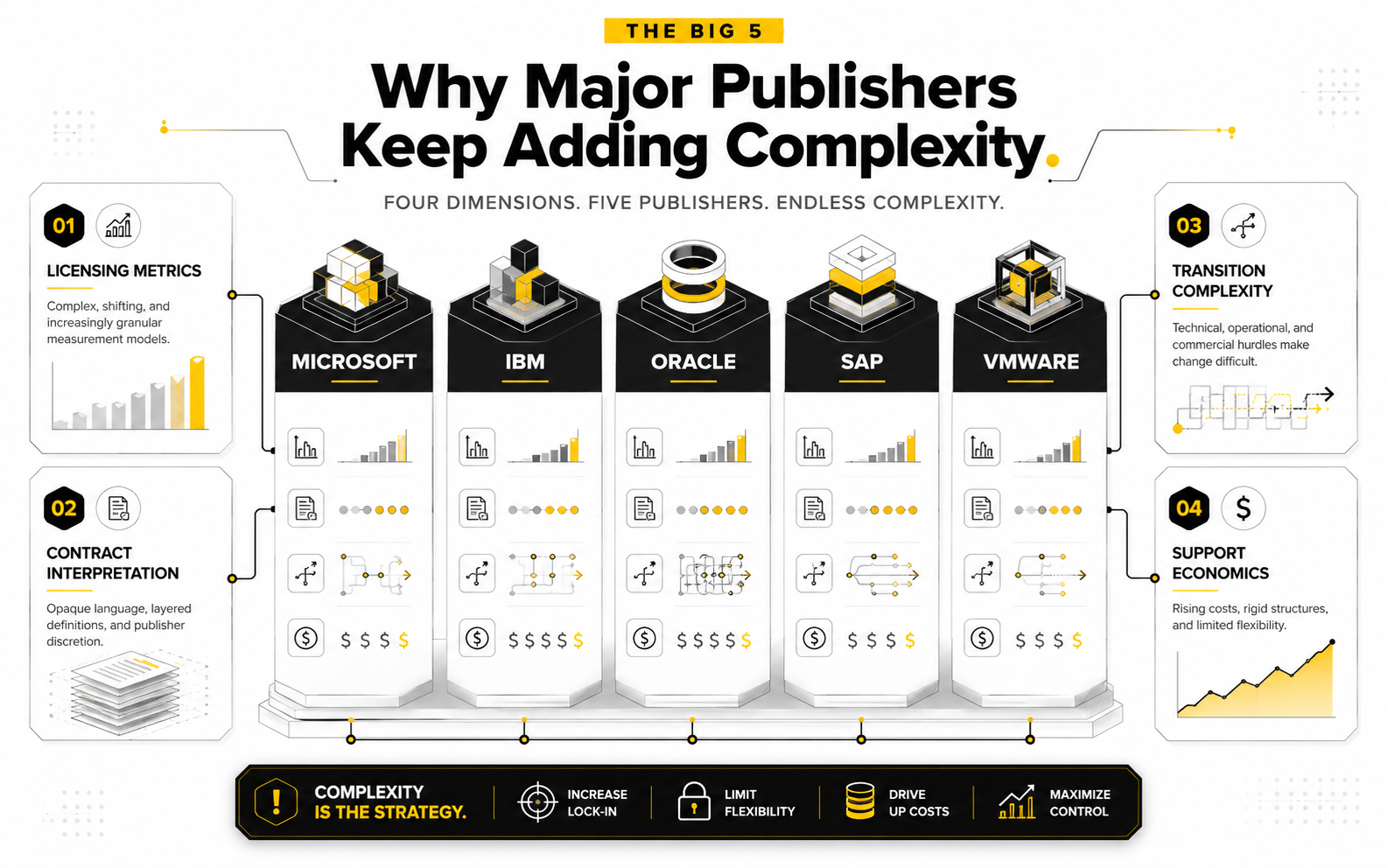
The Big 5: Why Microsoft, IBM, Oracle, SAP, and VMware Keep Adding Complexity
A concise complexity map showing where the largest software publishers create friction across licensing, support, cloud transitions, and commercial governance.
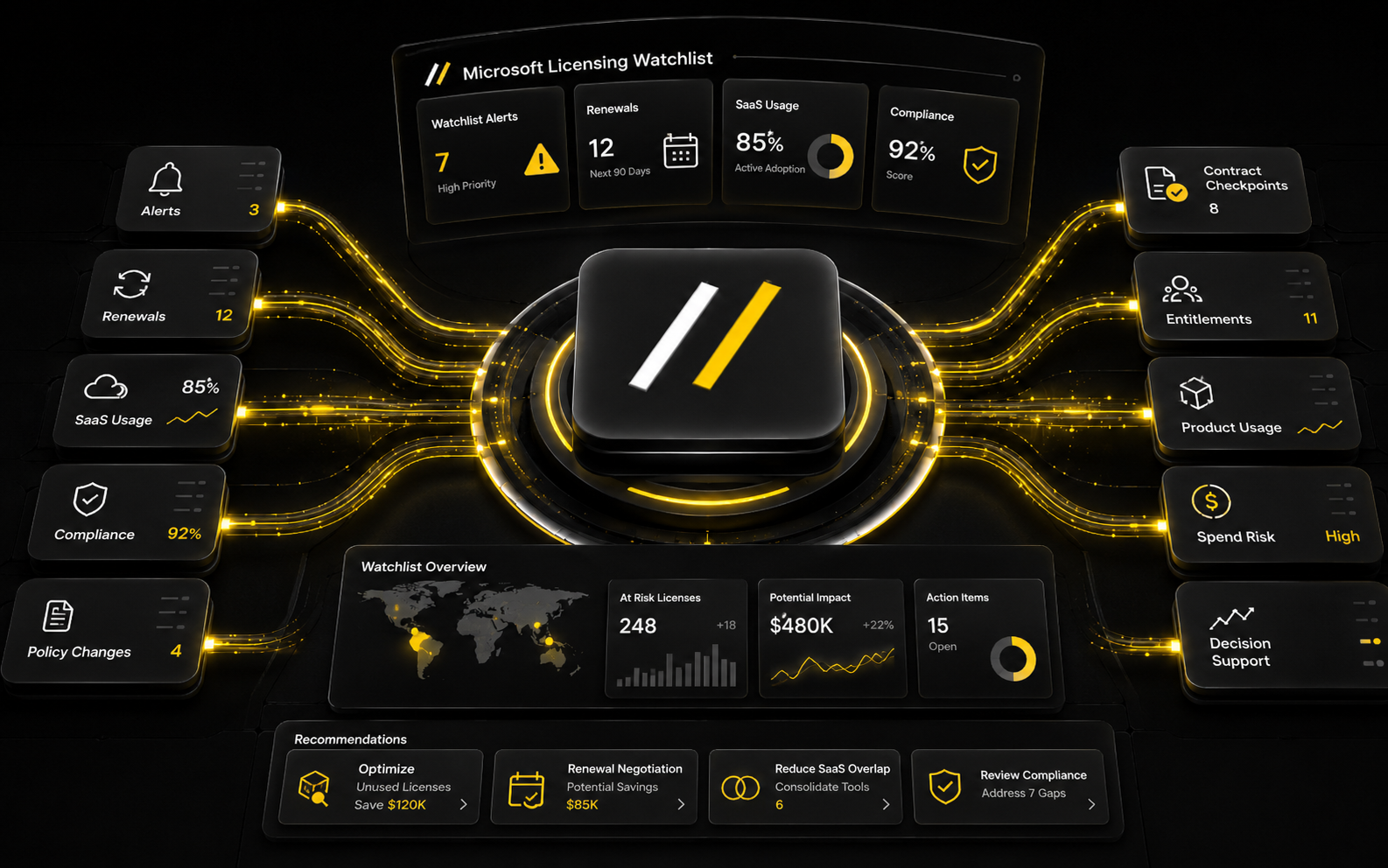
Microsoft Licensing Watchlist for 2026: 6 Areas to Monitor
The six Microsoft licensing themes that deserve active monitoring in 2026—from commercial routes and M365 packaging to Azure commitments and Power Platform capacity.
Need help turning insight into action?
The exchange is built to help teams structure the problem first—then engage the right expertise.