

Key takeaways
- Support reduction starts with segmentation, not escalation. Treat every support line differently based on business value.
- The best first-pass target is usually inactive support, duplicate coverage, and low-value products—not mission-critical production workloads.
- Support optimization needs a contract view, an installed base view, and a roadmap view. Any two are not enough.
- Third-party support is one lever, not the whole strategy. Even where it is not selected, it can improve negotiation posture.
- Always model savings against risk: saving 18% on support is attractive only if the workload can actually tolerate the chosen path.
Support cost can quietly become one of the most persistent spend lines in a software estate. The challenge is that not all support spend is bad spend. Some of it protects critical production systems, some of it preserves strategic options, and some of it is simply legacy inertia.
The job is not to cut support indiscriminately. The job is to separate support you need from support you inherited.
Start with a support baseline
Build one table across IBM, SAP, Oracle, and VMware with five columns: product family, annual support cost, workload criticality, active usage, and roadmap status. That single model makes conversations faster because it replaces anecdotal debate with comparable evidence.
| Lever | How it works | Best used when |
|---|---|---|
| Retire inactive lines | Remove support on products with no strategic or operational value. | Usage is near-zero or the application is being decommissioned. |
| Re-scope support base | Reduce quantities or align support to the real footprint. | Entitlements exceed active deployment. |
| Negotiate renewal terms | Use timing, competitive pressure, or roadmap clarity to improve commercials. | Renewal has enough lead time and the estate is defensible. |
| Evaluate alternative support models | Consider third-party support or selective coverage changes. | The workload is stable and upgrade dependence is low. |
An example savings model
Current position
$2.4M annual support across four publishers, spread over 19 product families.
Initial finding
17% of support cost tied to low-use or sunset workloads, 11% tied to quantities above active need.
Optimized path
Reduce low-value lines, renegotiate strategic renewals, and isolate stable workloads for alternative support evaluation.
Resulting target
A first-pass modeled reduction range of 10–20% without destabilizing the core estate.
Publisher-by-publisher guidance
- IBM: pay close attention to the metric model in use, SWMA obligations, and whether container or cloud deployment changed the commercial baseline.
- SAP: segment named user support, engine support, and digital access exposure separately. They behave very differently.
- Oracle: support reduction is often constrained by historical licensing and policy assumptions, so scope validation matters more than rhetoric.
- VMware: after major commercial changes, review support position alongside platform roadmap, virtualization strategy, and workload criticality.
The controls you must keep
- Maintain a defensible entitlement archive before changing the support position.
- Document which workloads would lose publisher support and what operational fallback exists.
- Confirm whether upgrade, migration, or security plans depend on staying current.
- Give procurement a decision pack with cost, risk, and timing—not just a savings number.
Bottom line
Support optimization works when it is treated like portfolio management. Some lines should be protected, some should be renegotiated, and some should be challenged. The value comes from making those distinctions deliberately.
Quick FAQ
Who is this article for?
ITAM leaders, sourcing teams, software asset managers, procurement stakeholders, and advisors dealing with support-related decisions.
Detailed PDF guide
Download the full guide
The web article gives you the concise view. The PDF includes deeper analysis, visual timelines, flowcharts, checklists, and practical review steps.
What should I do next?
Use this article to sharpen your internal brief, then submit an initiative or reach out if your team needs specialist help.
Related insights
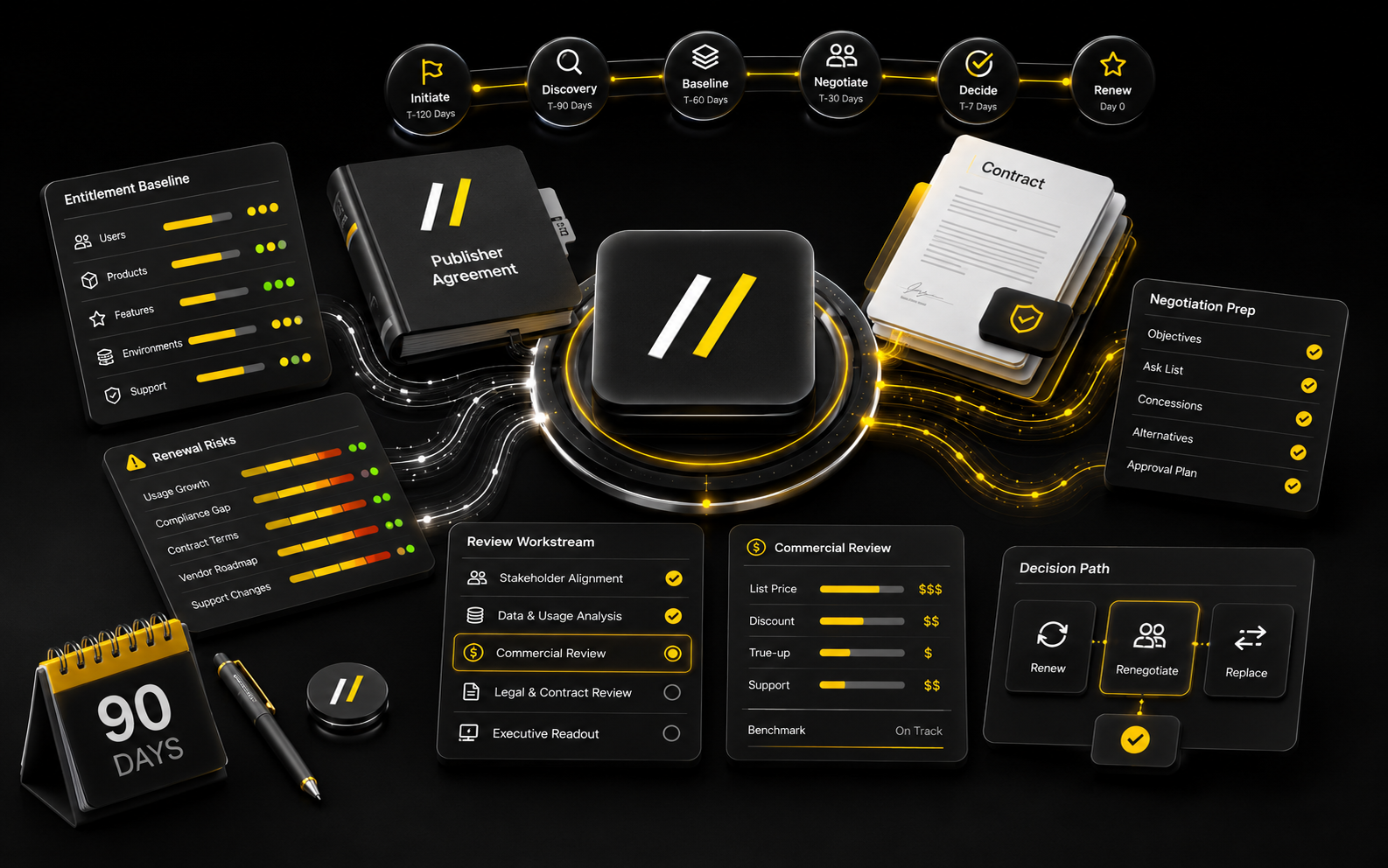
How to Scope a Publisher Renewal Review Before You Negotiate
A practical framework to define scope, data inputs, support footprint, stakeholders, and negotiation levers before a publisher renewal turns into a rushed commercial exercise.
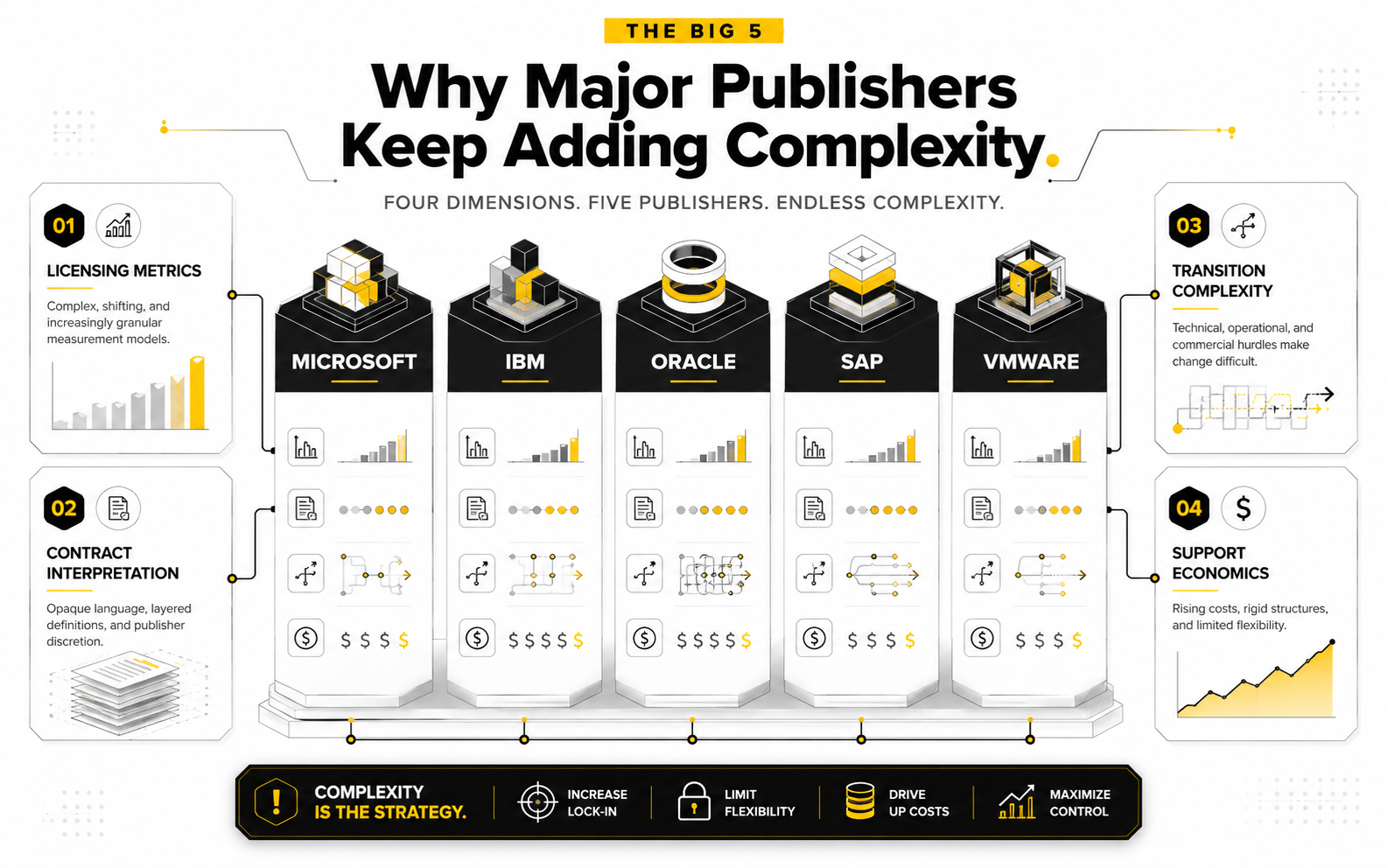
The Big 5: Why Microsoft, IBM, Oracle, SAP, and VMware Keep Adding Complexity
A concise complexity map showing where the largest software publishers create friction across licensing, support, cloud transitions, and commercial governance.
Need help turning insight into action?
The exchange is built to help teams structure the problem first—then engage the right expertise.