
Key takeaways
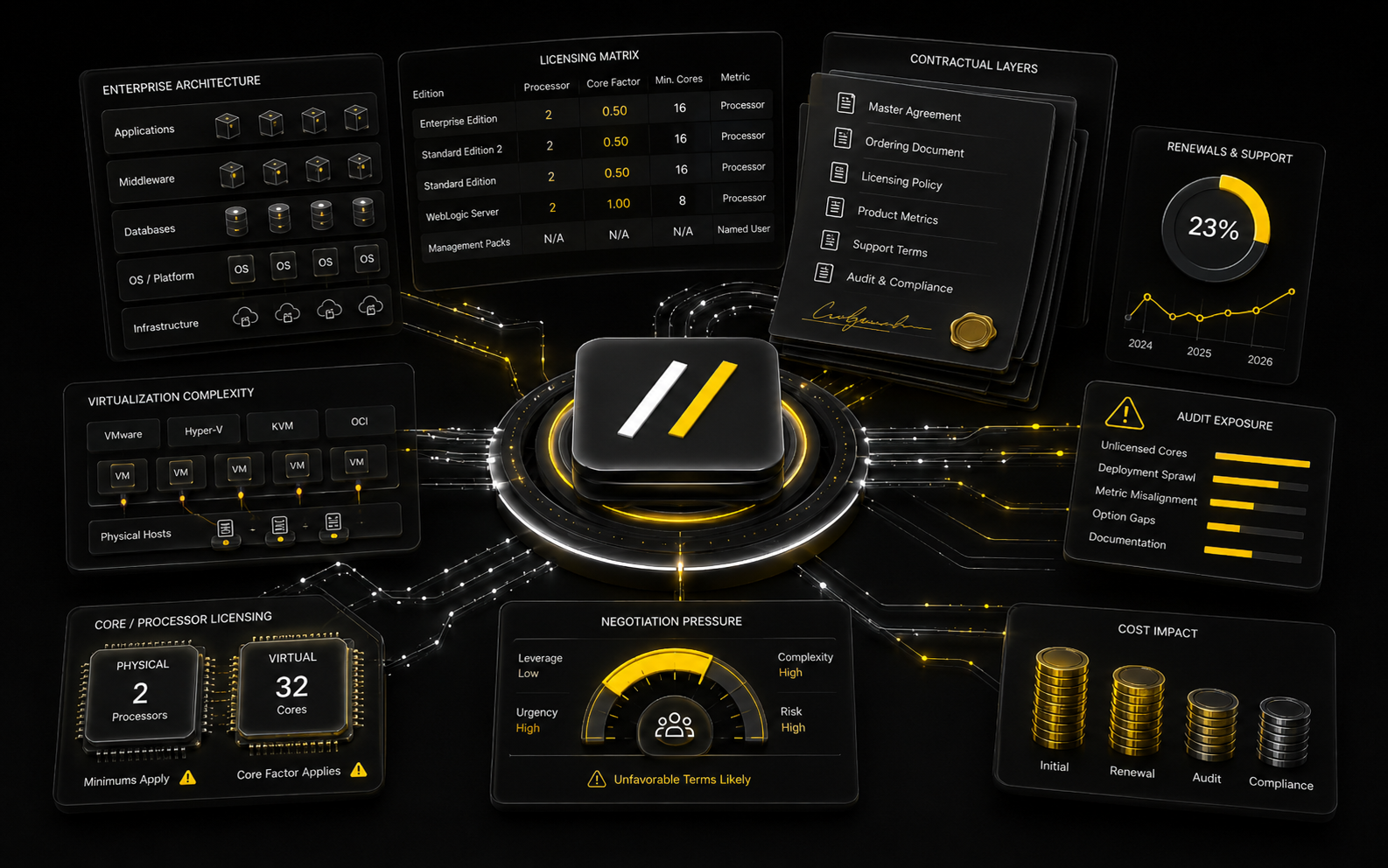
- Oracle complexity usually appears at the intersection of infrastructure design, product options, and historical procurement.
- Processor measurement, virtualization boundaries, and support history should be reviewed together, not separately.
- The support conversation is often constrained by the licensing conversation, which is why surface-level savings reviews disappoint.
- Java governance now belongs in many Oracle conversations even when the main estate discussion began elsewhere.
- One clean entitlement ledger is more valuable than dozens of inconsistent spreadsheets.
Oracle rarely feels complex because of a single clause or a single product. It feels complex because multiple decisions stack on top of each other: infrastructure design, processor calculation, partitioning assumptions, options, management packs, support history, and increasingly Java governance.
The 5 drivers of complexity
- Processor cores: how the underlying infrastructure is measured has direct commercial impact.
- Virtualization: the architecture model and the way estates are segmented can change the licensing story materially.
- Options and packs: seemingly small product choices can have outsized cost implications.
- Support economics: historical support position can constrain future restructuring options.
- Java overlap: Java is now a governance topic in its own right and can sit adjacent to broader Oracle reviews.
Review Oracle in 3 layers
| Layer | Questions to answer |
|---|---|
| Contract layer | What was bought, under which metric, and under which legal entity? |
| Deployment layer | Where is it installed, enabled, or used, and under what infrastructure assumptions? |
| Commercial layer | What is the support baseline, what flexibility exists, and what future state is realistic? |
The questions worth asking early
- Which Oracle products are truly strategic in the next 24 months?
- Which estates are stable enough for cost optimization versus too sensitive for aggressive change?
- Where do options, packs, or Java create additional exposure?
- How much support spend is attached to workloads with limited strategic value?
A practical operating model
Create one Oracle decision pack with topology assumptions, product inventory, procurement history, support baseline, and remediation options. That pack should be the reference point for audit, renewal, optimization, and advisory conversations alike.
Outcome to aim for
The objective is not only compliance. It is a controlled Oracle position—one where technical architecture, commercial posture, and long-term roadmap are no longer being managed in different rooms.
Quick FAQ
Who is this article for?
ITAM leaders, sourcing teams, software asset managers, procurement stakeholders, and advisors dealing with oracle-related decisions.
Detailed PDF guide
Download the full guide
The web article gives you the concise view. The PDF includes deeper analysis, visual timelines, flowcharts, checklists, and practical review steps.
What should I do next?
Use this article to sharpen your internal brief, then submit an initiative or reach out if your team needs specialist help.
Related insights
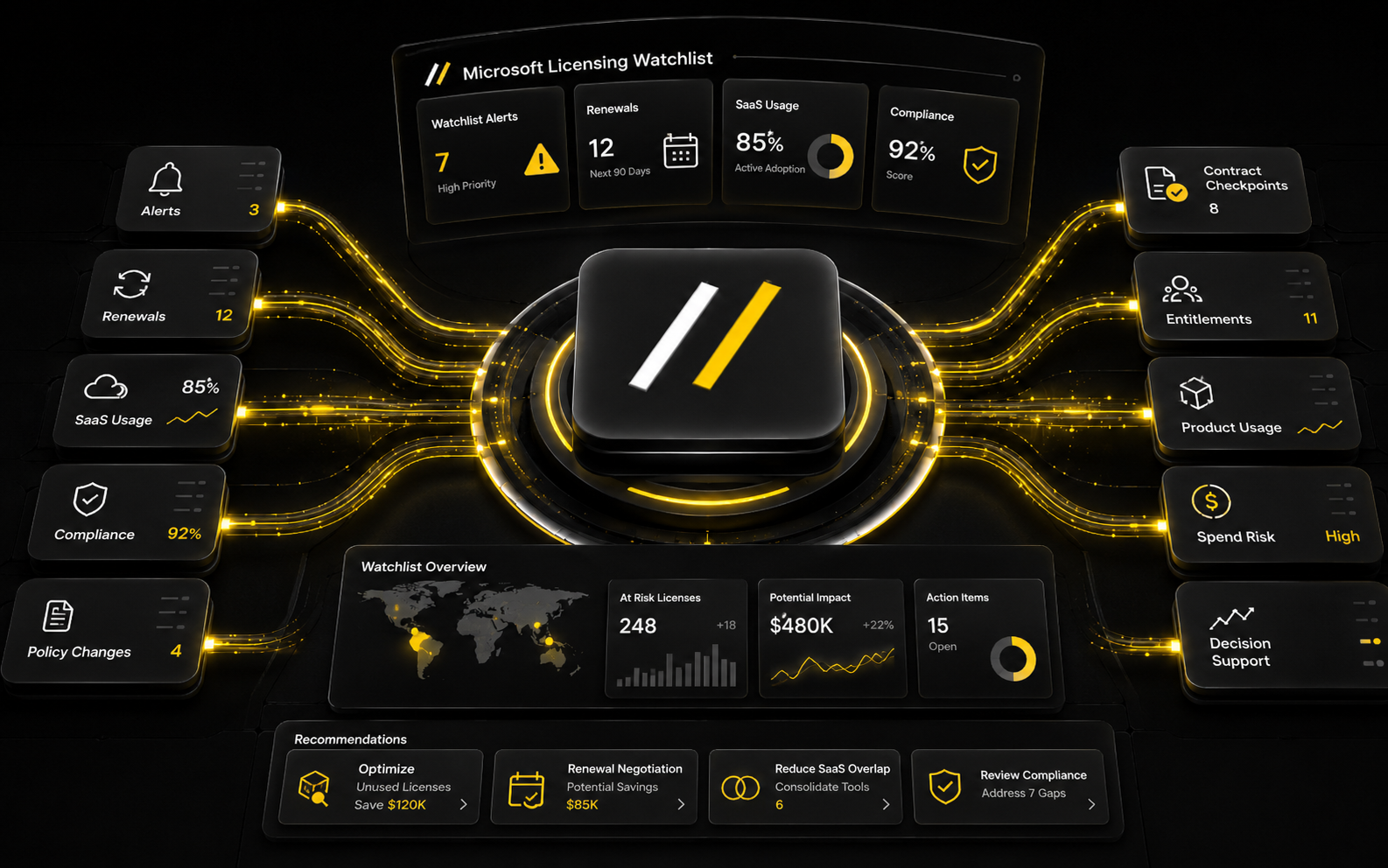
Microsoft Licensing Watchlist for 2026: 6 Areas to Monitor
The six Microsoft licensing themes that deserve active monitoring in 2026—from commercial routes and M365 packaging to Azure commitments and Power Platform capacity.
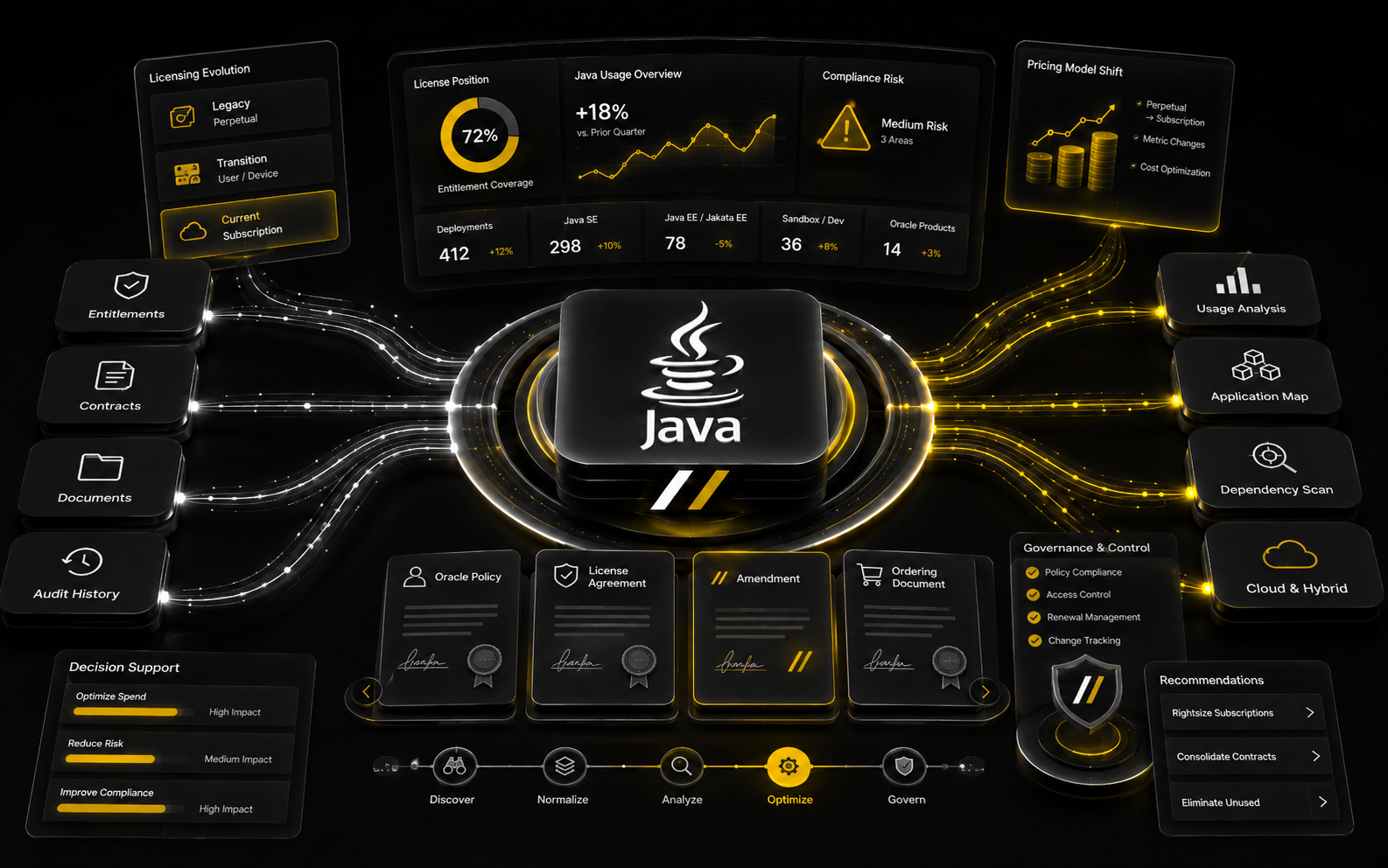
Java Licensing: How It Changed and What It Means Now
A concise history of the major Java licensing model shifts and the governance questions that enterprises should be asking now.
Need help turning insight into action?
The exchange is built to help teams structure the problem first—then engage the right expertise.