

Key takeaways
- SAP is rarely complex for only one reason. User licensing, engine metrics, and digital access can all matter at the same time.
- A good SAP review separates human user demand from technical transaction demand.
- Indirect use and digital access deserve explicit governance, not occasional interpretation.
- Support cost should be reviewed alongside SAP roadmap, not after it.
- You need one consolidated SAP position across BASIS, application teams, procurement, and ITAM.
SAP complexity is often operational before it becomes commercial. Teams inherit named user populations, engine-based metrics, interface traffic, and support commitments over time. The issue is not just to count them. The issue is to understand what they mean in context.
The 5 areas to review
- Named users: who needs what level of entitlement and why?
- Digital access: where do non-human or third-party interactions create licensing implications?
- Indirect use: are interfaces and integrated systems being interpreted consistently?
- Engine metrics: which SAP engines are measured, how, and by whom?
- Support: what is the annual support burden and how does it align with roadmap value?
A better operating model
| Topic | Owner | Key control |
|---|---|---|
| Named user governance | Application owner + ITAM | Periodic review of population and role fit. |
| Engine metrics | Platform owner | Documented measurement source and cadence. |
| Digital access | Architecture + ITAM | Interface inventory and transaction mapping. |
| Support optimization | Procurement + business owner | Roadmap-based review before renewal. |
Common mistakes
- Using historical user categories without revalidating business need.
- Treating indirect use as a purely legal issue instead of an architecture and data-flow issue.
- Assuming engine metrics are self-explanatory because the platform team “knows the landscape.”
- Ignoring support cost on low-strategic-value modules or legacy footprints.
Goal
The aim is one SAP position that brings together users, engines, integrations, and support. Once those are connected, commercial decisions get significantly clearer.
Quick FAQ
Who is this article for?
ITAM leaders, sourcing teams, software asset managers, procurement stakeholders, and advisors dealing with sap-related decisions.
Detailed PDF guide
Download the full guide
The web article gives you the concise view. The PDF includes deeper analysis, visual timelines, flowcharts, checklists, and practical review steps.
What should I do next?
Use this article to sharpen your internal brief, then submit an initiative or reach out if your team needs specialist help.
Related insights
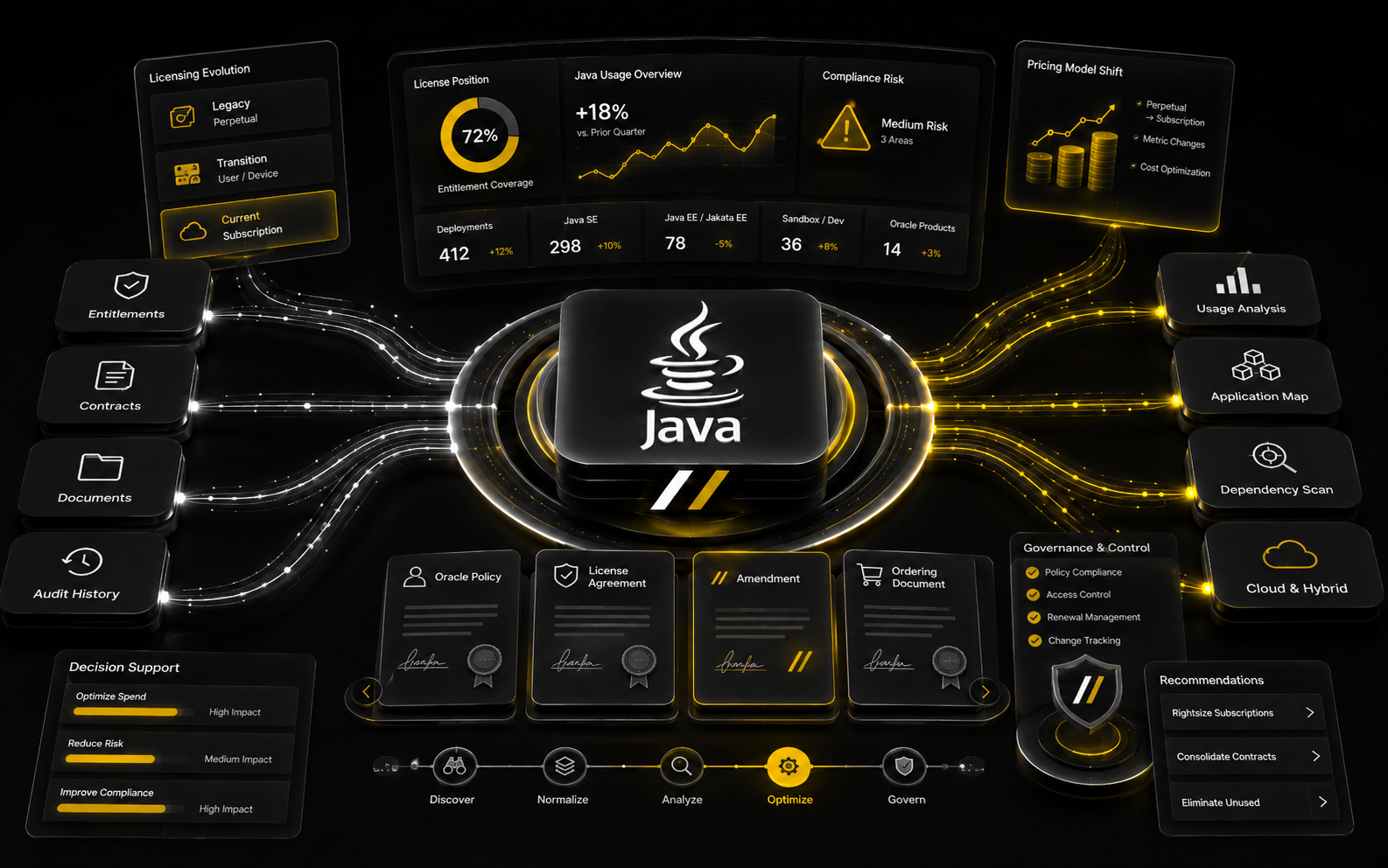
Java Licensing: How It Changed and What It Means Now
A concise history of the major Java licensing model shifts and the governance questions that enterprises should be asking now.

IBM Licensing Complexity Explained: Why the Details Matter
A focused guide to IBM licensing complexity across PVU, VPC, ILMT, containers, and support-related entitlements.
Need help turning insight into action?
The exchange is built to help teams structure the problem first—then engage the right expertise.